Reviewed · TURIN
Flight Simulator HI SPEED for 30 Mins
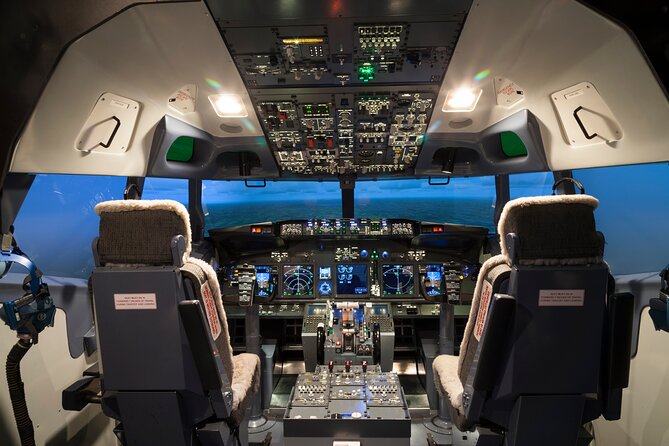
Flying a 737 in Turin feels both serious and playful. You sit in a realistic B737 cockpit on the iFLY simulator, with all the onboard instrumentation and a 220° projection system that helps you practice approaches in different scenarios. Two things I’d put at the top: you get a professional pilot seated right beside you, and you’re guided through real standard flight procedures during your session.
One thing to keep in mind: this is focused on flying the key phases, not full aircraft operation. Engine startup, taxiing, runway alignment, FMC programming, and shutdown are not included, so it’s less of a complete airline-style training day.
In This Review
- Key highlights before you book
- Inside the iFLY Boeing 737 cockpit in Turin
- What you actually do during your 30-minute flight
- The 220° landing practice: more than a pretty screen
- The pilot-at-your-side setup (and why it’s smart)
- Takeoff, short circuit, and landing at the same airport
- Passenger seats: who gets to sit in the cockpit
- Price and value: is $155.42 for 30 minutes fair?
- Meeting point and getting there in Turin
- Who should book this simulator session?
- Practical tips to get the most out of your time
- Should you book Flight Simulator HI SPEED in Turin?
- FAQ
- How long is the Flight Simulator HI SPEED experience?
- What plane will you fly in the simulator?
- Is there a real pilot involved?
- What is included in the session?
- What’s not included?
- Is the experience offered in English?
- Where do you meet in Turin?
- Is this a private tour/activity?
- Can you cancel for a full refund?
Key highlights before you book
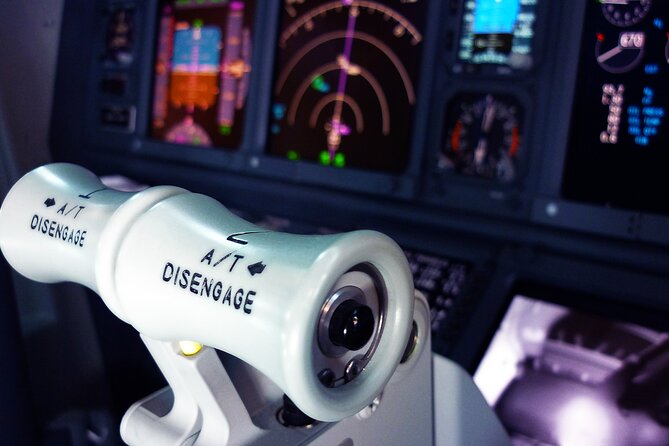
- Real B737 pilot next to you for guidance in the cockpit, not just a demo
- Takeoff, short circuit, and landing at the same airport during your session
- 220° video projection system so you can practice landing approaches in different settings
- You’re the pilot with standard flight procedures taught during the experience
- Passenger seats in the back of the cockpit for 1–2 people on your ticket
Inside the iFLY Boeing 737 cockpit in Turin
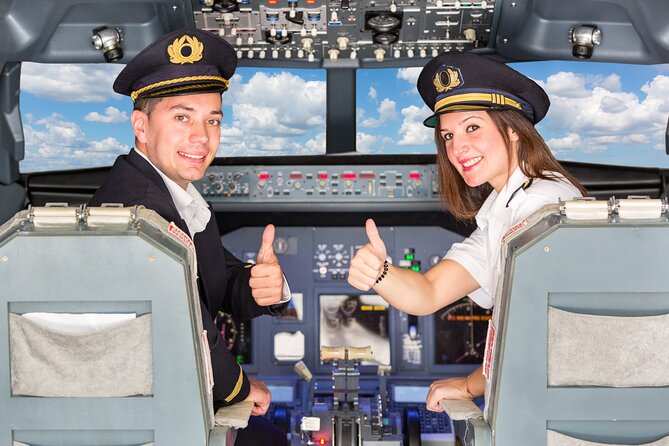
This experience is built around one goal: make you feel like you’re actually in command. You’ll board a simulator setup designed to resemble a working cockpit, with the on-board instruments in place and an operator guiding you through standard flight procedures.
The big visual trick is the 220° video projection system. Instead of staring at a static screen, you get a wide field of view that supports approach practice. The scenarios can range from warm, island-style approaches to colder, snow-and-ice style conditions like Alaska—meaning your practice isn’t just repetition. It’s still simulator time, but it feels more like doing laps than watching a slideshow.
And here’s the practical value: because the real pilot is seated beside you, you’re not left guessing what matters during takeoff and landing. You get direction while you’re flying, which is where most “fun simulator” experiences fall short.
What you actually do during your 30-minute flight
Your session is about 30 minutes, and the experience is structured around the phases that most people remember: takeoff, then a short circuit, and then landing. You fly aboard a simulator set to a Boeing 737, but you’re not doing the whole airline checklist from scratch.
That’s important when you set expectations. Your included time covers flying the meaningful parts—because you’ll be guided through standard flight procedures during the session, and you’ll practice an approach using the projection system. You also start with the setup already done for you: the engine is started and aligned with the runway in use.
So if you’re hoping for the full end-to-end workflow—engine startup, taxi procedures, taxi to gate, and shutdown—you won’t get that here. Those steps are explicitly not included. The upside is that you lose less time “prepping” and more time actively flying.
For many people, that’s the sweet spot. In 30 minutes, you want your hands on the controls and your brain on the tasks that matter most in takeoff and landing. This format is built for that.
More tours worth booking from a Turin base, out under the arcades and up into the Langhe hills.





The 220° landing practice: more than a pretty screen
Landing is where flight sims feel real, because small inputs turn into visible results fast. This session leans into that with its wide 220° projection system, letting you try a landing approach in whatever scenario you wish—from Caribbean-style environments to ice-like conditions.
Why that matters for you: different visual contexts can change how you judge the approach. Depth cues, horizon behavior, and the “shape” of the landing environment can make training feel more varied. Even if you already know the basics, the simulator doesn’t just throw you into one generic runway view.
It also makes the session easier to enjoy even if you’re not an aviation nerd. You can still understand what you’re doing as you line up, manage the descent/approach, and aim for touchdown. The visuals support the learning, and the learning supports the fun.
And yes, this is built to be enjoyable for youngsters too. The experience is centered on you flying and seeing immediate feedback, which is exactly what makes a short hands-on session work for different age groups.
The pilot-at-your-side setup (and why it’s smart)
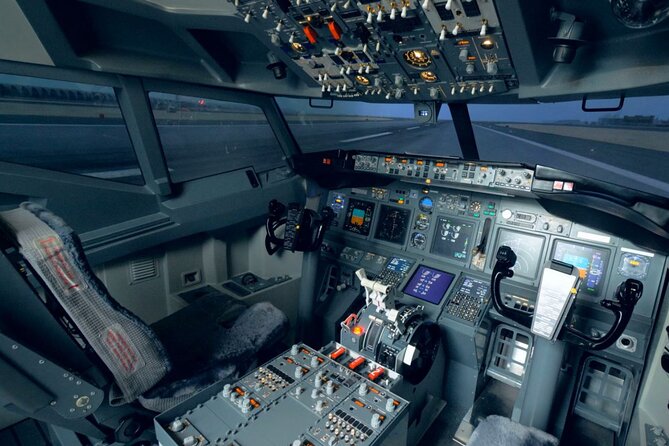
The included guidance is one of the strongest reasons this session earns a top rating. A real professional B737 pilot is always seated at your side, and an operator guides you through standard flight procedures.
That matters because it turns the simulator from a toy into a coached activity. You’re not just steering with blind confidence. You get instruction while you’re inside the cockpit environment, which helps you connect actions to outcomes quickly.
There’s also a clever time-saver: the engine is already started and already aligned with the runway in use when you begin. Taxi and runway alignment, engine startup procedures, and FMC programming are not included. In normal training, those are major steps. Here, the session trims those parts to protect the core goal: you fly.
If you’re a first-timer, that reduces intimidation. If you’re an aviation geek, you still get the real cockpit feel and the chance to practice approach behavior with instruction, even if the setup skips some of the technical programming workload.
- Turin: Torino+Piemonte 2-Day City Card
★ 4.6 · 1,837 reviews - Turin: Guided Egyptian Museum Tour
★ 4.7 · 1,573 reviews - Turin: Magic Guided Tour
★ 4.6 · 1,447 reviews - Turin: Turin & Piedmont 3-Day City Card
★ 4.7 · 1,434 reviews
Takeoff, short circuit, and landing at the same airport
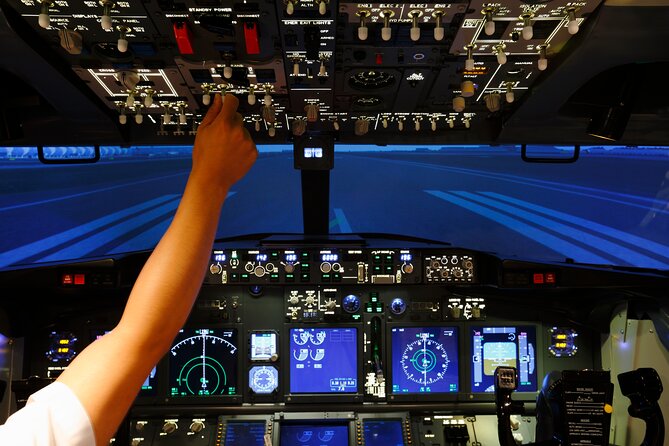
One detail that makes this session feel cohesive: you do takeoff, then a short circuit, then landing at the same airport. That reduces confusion and helps you stay focused on what’s happening in front of you.
In practical terms, it means you’re not constantly reorienting to a new field, new layout, and new surroundings. The learning is more continuous. You can treat it like one connected exercise: get airborne, set up for the circuit, line up for approach, and land.
The “short circuit” part also keeps the timing tight. You don’t spend your whole session commuting to the next step. For a 30-minute slot, that’s exactly what you want.
Could it be limiting? Yes, in a narrow sense. If your main goal is to experience a full multi-stage flight day with taxiing, navigation, and long en-route segments, you’ll feel that absence. But for anyone who wants the cockpit experience plus landing approach practice, this structure hits the mark.
Passenger seats: who gets to sit in the cockpit
If you’re not traveling solo, you’ll appreciate that the ticket includes 1–2 passenger seats in the back of the cockpit. That means your group doesn’t just watch you through a door window. They can be part of what’s happening in the cabin area and share the experience more directly.
Because this is offered as a private tour/activity, only your group participates. That can make the session feel more personal and reduce the “wait your turn” feeling that sometimes happens in group attractions.
Who this suits: pairs, small families, and friends who want a shared memory without turning it into a scripted group show. It’s also good if you want someone to learn along while you’re flying.
Price and value: is $155.42 for 30 minutes fair?
At $155.42 per person for about 30 minutes, the price isn’t cheap, but it’s not random either. You’re paying for several things that many “just try the controls” options don’t include:
- a real professional B737 pilot seated at your side
- instruction through standard flight procedures
- an iFLY simulator with realistic cockpit instruments
- takeoff, short circuit, and landing at the same airport
- the engine already started and aligned with the runway
You’re also getting the wide 220° projection for approach practice in different scenarios, which adds a “variety” factor beyond a single generic runway view.
So where does the value risk show up? If you expect a full training day, or if you want to handle startup, taxi, runway alignment, FMC programming, and shutdown, this session won’t satisfy that checklist. Since those are not included, you’re essentially buying time in the most exciting part: flying and landing under guidance.
A second consideration: 30 minutes passes fast. If you’re the kind of person who wants to keep learning step-by-step for longer, consider how quickly you personally absorb instruction. The session is great for an intense taste test; it’s less ideal if you want to spend hours in the seat.
Meeting point and getting there in Turin
You’ll meet at Via Salbertrand, 77, 10146 Torino TO, Italy, and the activity ends back at the meeting point. That’s helpful because you’re not locked into an airport transfer situation.
The experience also notes it’s near public transportation, which matters in a city where parking can be annoying and schedules can change. If you’re planning your day in Turin, this makes it easier to slot in the simulator session without building your whole itinerary around private rides.
One more practical detail: transfers between two different airports are not included. The activity is centered on this one meeting location, so plan to get yourself there directly.
Who should book this simulator session?
This works best for people who want the cockpit feel and the thrill of flying without needing prior experience.
- Aviation fans: You’ll get the B737 cockpit setup, real pilot guidance, and a focused takeoff-to-landing flow.
- Curious beginners: The engine is already started and aligned with the runway, so you skip the most technical prep steps and focus on learning through flying.
- Families and youngsters: The session includes a lot of visual feedback and approach practice, and it’s designed to be fun for younger participants too.
- English speakers: The experience is offered in English, so the instructions should be straightforward if that’s your comfort language.
If you’re the type who wants to program an FMC, do taxi/ramp procedures, and shut down the aircraft as part of a full training sequence, you might feel like parts of the job are missing. In that case, treat this as a hands-on flying and landing experience rather than a full airline simulation course.
Practical tips to get the most out of your time
Because the included portion focuses on key flight phases, you’ll get more value if you walk in ready to pay attention during instruction.
- Expect that the session starts with the engine already started and runway alignment already done. Let that set the tone: you’re there for control and procedures during flying, not for prep.
- Use the 220° scenarios to your advantage. If you can choose what you practice, pick the setting that feels most interesting to you. The point is to make approach practice feel varied.
- Bring your group in with the right attitude. Passengers can sit in the back of the cockpit, so it’s not just you learning. If someone in your party is curious, they can watch and follow along with what the pilot/operator is guiding.
- Since it’s about 30 minutes, keep your own schedule buffer. A short session is fun, but you don’t want it squeezed by late arrivals or tight connections.
Should you book Flight Simulator HI SPEED in Turin?
Yes, you should book this if you want a realistic Boeing 737 simulator experience in a real cockpit setting, with a professional pilot seated beside you and guided instruction during flying. The takeoff-to-landing structure and the 220° approach practice give you a lot of the “real flight” feeling in a tight time window.
Skip it or adjust expectations if you’re looking for full training-style work like engine startup procedures, taxiing, runway alignment, FMC programming, and shutdown. This is a targeted flight-and-landing experience, not a complete day of cockpit operations.
If you’re torn, the easiest decision rule is this: book it if you want to fly and practice approaches with coaching. Pass if you mainly want a full checklist simulation from start to finish.
FAQ
How long is the Flight Simulator HI SPEED experience?
It lasts about 30 minutes.
What plane will you fly in the simulator?
You fly aboard a Boeing 737 in the iFLY simulator.
Is there a real pilot involved?
Yes. A real professional B737 pilot is seated at your side, and an operator guides you through standard flight procedures.
What is included in the session?
Included are takeoff, a short circuit, and landing at the same airport, with the engine already started and aligned with the runway in use. The ticket also includes 1–2 passenger seats in the back of the cockpit.
What’s not included?
Not included are transfers between two different airports, engine startup procedure, FMC programming, taxi and runway alignment, taxi to the gate, and airplane shutdown.
Is the experience offered in English?
Yes, it’s offered in English.
Where do you meet in Turin?
The meeting point is Via Salbertrand, 77, 10146 Torino TO, Italy.
Is this a private tour/activity?
Yes. Only your group will participate.
Can you cancel for a full refund?
Yes. You can cancel up to 24 hours in advance for a full refund. Canceling less than 24 hours before the start time is not refunded.
More Tour Reviews in Turin
- Turin: Torino+Piemonte 2-Day City Card★ 4.6 · 1,837 reviews
- Turin: Guided Egyptian Museum Tour★ 4.7 · 1,573 reviews
- Turin: Magic Guided Tour★ 4.6 · 1,447 reviews
- Turin: Turin & Piedmont 3-Day City Card★ 4.7 · 1,434 reviews
- Turin: Egyptian Museum Small Group Skip-the-Line Guided Tour★ 4.8 · 1,332 reviews
- Turin: Hop-on Hop-off Bus Tour with 24 or 48-Hour Ticket★ 4.2 · 941 reviews