Reviewed · TURIN
Flight Simulator INTERMEDIATE CRUISE 60 Mins
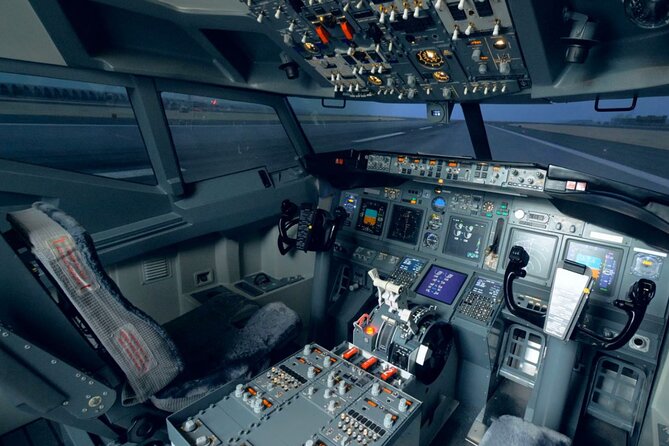
Fly a real plane feeling, without the stress of flying. In Turin, this 60-minute flight simulator session puts you at the controls with the runway, engines running, and full cockpit systems for a realistic takeoff-to-landing experience. I like the force-feedback yoke and hydraulic feel, and I also like that the cockpit setup is built to teach—takeoff, climb, cruise, descent, approach, and landing procedures are all part of the session. One thing to consider: the experience does not include engine startup or FMC programming, so you’re jumping into a plane that’s already running.
You can choose to run a whole route or focus on multiple procedures around the departure airport, and you’re not limited by weather either. You also get 1–2 passenger seats in the back of the cockpit if you want someone riding along with you. If you’re expecting to do everything from scratch like a full preflight sequence, you’ll need a different style of lesson.
In This Review
- The 60-Minute Intermediate Cruise: What You Actually Do
- Cockpit Feel That Makes It Worth the Trip
- Instructor Pilot Support: Learning Without Guessing
- Route Choices: Whole Flight or Procedure Practice
- Weather Is Included, so You Don’t Need Luck
- What’s Included vs What You Skip (This Matters)
- Your “Passenger Seat” Experience Inside the Cockpit
- Price and Value: Why $215.32 Can Make Sense
- Where to Meet in Turin (And How to Get There Smoothly)
- Tips to Make Your Flight Session Go Better
- Who This Is Best For (And Who Might Want a Different Option)
- Should You Book This Flight Simulator Session?
- Quick decision checklist
- FAQ
- FAQ
- How long is the flight simulator session?
- Where does the experience start and end?
- Is the session private?
- What language is the session offered in?
- What happens during the lesson after the briefing?
- Can you practice flying in different weather?
- What’s included in the ticket?
- What is not included?
- Can passengers ride along in the cockpit?
- What are the cancellation rules?
- Are service animals allowed?
The 60-Minute Intermediate Cruise: What You Actually Do
This is not a quick joystick ride. It’s designed like a training flight with a real instructor pilot sitting right beside you, in control of the pace and the teaching moments.
The session starts with the plane already aligned on the active runway, engines already started, and you in position. After a takeoff briefing, you handle the manoeuvres from takeoff through the initial climb. After that, you pick what you want to focus on: an entire route, or several procedures in the departure area. The simulation ends after landing, with the aircraft still on the runway, so you finish with a clear wrap-up instead of a sudden cut.
Time-wise, plan on about an hour, and know this is a private activity for your group (so you’re not mixed into a crowd mid-lesson). Language is English, which matters because the explanations are part of the value, not just background chatter.
Cockpit Feel That Makes It Worth the Trip
A big reason this simulator stands out is how physical it feels. The setup includes full and working avionics, plus a real yoke force feedback control loading system with a hydraulic system. That’s the difference between a game and a tool. Your hands don’t just move; they react like controls with resistance and load.
Then there’s the view: a 220-degree full panoramic screen. That matters for situational awareness. When you’re practicing approaches and lining up, you’re not stuck staring at one narrow display. Your eyes get to work the same way they do in the real cockpit—scan outside, cross-check instruments, and adjust your plan based on what you see.
And yes, the simulation covers airport procedures broadly—every airport procedure in the world is part of the claim here—so you’re not locked into one generic demo pattern.
Instructor Pilot Support: Learning Without Guessing
Here’s the part that consistently makes or breaks flight sim experiences: whether the instructor teaches or just hands you controls.
This one includes a real instructor pilot always on your side. That means you’re not left to figure things out alone, and it also means your questions can land at the right moment—before you practice the wrong habit for too long.
The names that come up in past sessions include Riccardo and Marco. Across the shared experiences, the common thread is professionalism and patient guidance, even for first-timers. One memorable pattern is that the instructor doesn’t only explain systems; they help you understand what’s happening in the cockpit while you’re driving it. That turns the session into an education you can feel in your hands.
More tours worth booking from a Turin base, out under the arcades and up into the Langhe hills.





Route Choices: Whole Flight or Procedure Practice
You’ll have a choice after the initial climb.
Option one is an entire route. That’s best if you want the full arc: takeoff rhythm, climb management, cruise workflow, descent planning, and an approach that leads into landing.
Option two is several procedures around the departure airport. That’s often the smarter approach if you’re newer or if your goal is specific skills. Doing multiple procedures in the same general environment helps your brain lock in:
- how you set up for approach
- how you manage speed and alignment
- how you correct when things drift
Either way, the simulation ends on the runway after landing, so you get closure and a natural finish point for questions and debrief.
Weather Is Included, so You Don’t Need Luck
A surprisingly practical detail: you can fly in any weather. In real aviation, weather drives workload and decisions. In a training setting, you want the opposite—repeatability.
With weather included, the session can be more than one “perfect day” demo. It can help you practice managing conditions through the phases you’re working on, like approach setup and landing control. Even if you’re not trying to master meteorology, the hands-on practice of handling different scenarios makes the session feel more like a real cockpit training experience.
- Turin: Torino+Piemonte 2-Day City Card
★ 4.6 · 1,837 reviews - Turin: Guided Egyptian Museum Tour
★ 4.7 · 1,573 reviews - Turin: Magic Guided Tour
★ 4.6 · 1,447 reviews - Turin: Turin & Piedmont 3-Day City Card
★ 4.7 · 1,434 reviews
What’s Included vs What You Skip (This Matters)
The included pieces are clearly written, and they’re important because they shape how the lesson feels.
Included:
- a real instructor pilot always on your side
- engine already started and already aligned with the runway in use
- takeoff, climb, cruise, descent, approaching and landing procedures
- 1–2 passenger seats in the back of the cockpit included in the ticket
Not included:
- engine startup procedure
- flight plan compiling stage
- FMC programming, taxi and runway allignment
- taxi to the gate and airplane shutdown
So here’s the best way to think about it: you’re training the part of flight that happens after the aircraft is ready to go. You’re not training checklist memory from a cold start, and you’re not spending the whole hour programming a flight computer.
If you’re dreaming of doing every single step like a full simulator day, this one is still great—but it’s geared toward flying and procedures, not full cockpit prep from scratch.
Your “Passenger Seat” Experience Inside the Cockpit
This session can include 1–2 passenger seats in the back of the cockpit. That’s a rare bonus and it changes how the experience lands emotionally.
If you go with a partner, sibling, parent, or kid, you can bring them into the cabin with you. They can watch your scan outside, learn what you’re doing, and feel the adrenaline of takeoff and landing without needing to operate the controls.
It’s also useful for families. One shared story included an 11-year-old coming along with the cabin experience and getting a taste of the controls with instructor help. The point: even if only one person is flying, the rest of the group doesn’t feel like they’re stuck in the corner watching a screen.
Price and Value: Why $215.32 Can Make Sense
At $215.32 per person for about one hour, you’re paying for more than the software. You’re paying for:
- a real instructor pilot in the room
- a cockpit setup with working avionics, force feedback, and hydraulic control feel
- a structured progression through takeoff, cruise, descent, approach, and landing
Flight sim sessions vary a lot in quality. A cheap one usually cuts instruction and realistic control feel. A better session like this one is priced closer to a guided experience than a ticketed demo.
Also consider the value of passenger seats. If you’re splitting the cost with someone who comes along for the ride, it turns into a shared memory, not solo entertainment.
Where to Meet in Turin (And How to Get There Smoothly)
You’ll start at Via Salbertrand, 77, 10146 Torino TO, Italy, and the activity ends back at the meeting point.
It’s near public transportation, and you’ll receive confirmation at booking time. Service animals are allowed, and the experience lists most travelers as able to participate. It also notes it’s in English, which matters if you’re traveling from outside Italy and want clear instruction without translation.
Tips to Make Your Flight Session Go Better
You don’t need to be a pilot to enjoy this. But a little prep will make the hour feel smoother.
First, come with curiosity, not pressure. Since the aircraft is already aligned and engines are running, you’re focusing on flying and procedure flow—so ask questions during the briefing.
Second, pay attention to the instructor’s rhythm. In a structured lesson, your best results come from following guidance closely during transitions: takeoff to climb, cruise to descent, and the approach-to-landing handoff.
Third, if you’re bringing passengers, remind them to watch the cockpit workload. Tell them to focus on when you adjust attitude, when you check instruments, and when you correct small errors. That’s where the realism lives.
Who This Is Best For (And Who Might Want a Different Option)
This works especially well if you want:
- a realistic cockpit feel with force-feedback controls
- structured training through all key flight phases
- a guided session that doesn’t leave you guessing
It’s also a strong pick for couples and families because of the optional passenger seats. And if you’re a beginner, the intermediate label doesn’t mean you’ll be thrown into advanced systems—what matters is that you’ll be taught during takeoff, cruise, descent, approach, and landing.
If you specifically want to do engine startup, taxi, runway alignment from scratch, FMC programming, and full flight plan building, you may feel constrained by what’s excluded here. In that case, you’d likely look for a package that covers preflight and planning steps.
Should You Book This Flight Simulator Session?
Book it if you want the feeling of flying a real airliner cockpit, with working avionics and real instructor coaching, for a focused 60-minute session. The panoramic screen, hydraulic control feel, and structured flight phases are exactly what make it more than entertainment.
Skip it if your dream is the full end-to-end cockpit day, from engine startup and taxi to gate and shutdown, or if you want heavy time spent on FMC programming and flight plan compilation.
If you’re on the fence, consider this simple rule: you’re here to practice flying skills and procedures while someone guides you. If that’s your goal, this is a very solid choice.
Quick decision checklist
- You want a guided takeoff-to-landing training flow: yes
- You care about realistic controls, not just visuals: yes
- You want to do startup and FMC planning yourself: no
FAQ
FAQ
How long is the flight simulator session?
It lasts about 1 hour.
Where does the experience start and end?
It starts at Via Salbertrand, 77, 10146 Torino TO, Italy, and ends back at the same meeting point.
Is the session private?
Yes. It’s a private tour/activity, and only your group will participate.
What language is the session offered in?
The experience is offered in English.
What happens during the lesson after the briefing?
After the takeoff briefing, you take the controls and perform manoeuvres from takeoff to the initial climb. After that, you can choose to do an entire route or several procedures around the departure airport.
Can you practice flying in different weather?
Yes. The simulation states you can fly in any weather.
What’s included in the ticket?
Included are a real instructor pilot, the engine already started and runway alignment done, takeoff/climb/cruise/descent/approach/landing procedures, and 1–2 passenger seats in the back of the cockpit.
What is not included?
Engine startup, flight plan compiling, FMC programming, taxi and runway alignment, taxi to the gate, and airplane shutdown are not included.
Can passengers ride along in the cockpit?
Yes. The ticket includes 1–2 passenger seats in the back of the cockpit.
What are the cancellation rules?
You can cancel for a full refund up to 24 hours in advance. If you cancel less than 24 hours before the start time, you won’t receive a refund.
Are service animals allowed?
Yes, service animals are allowed.
More Tour Reviews in Turin
- Turin: Torino+Piemonte 2-Day City Card★ 4.6 · 1,837 reviews
- Turin: Guided Egyptian Museum Tour★ 4.7 · 1,573 reviews
- Turin: Magic Guided Tour★ 4.6 · 1,447 reviews
- Turin: Turin & Piedmont 3-Day City Card★ 4.7 · 1,434 reviews
- Turin: Egyptian Museum Small Group Skip-the-Line Guided Tour★ 4.8 · 1,332 reviews
- Turin: Hop-on Hop-off Bus Tour with 24 or 48-Hour Ticket★ 4.2 · 941 reviews